What is ambient dance?
How can theatre and dance be a way to offer more stillness in the busyness? How can dance theatre be a space for spacious contemplation in a time rife with socio-ecological dissonance?
An Invitation
Before you begin going through this website, what is one action you could do to make it more spacious for you? Pour a cup of tea? Take 10 breaths? Look outside? Put on an album you love?
One action…
Video Essays
During this research, I have been pondering these questions gently and slowly. At the heart of this inquiry has been the concept of spaciousness; slowing down in order to experience life deeper. I say life as this research has affected my attitude both inside and outside of the studio and has met me in happiness, sadness, calm and chaos. Ambient dance is about being with the environment you are with.
Gently.
To chart this journey, I documented through reflective video essays each week. The theme of environmental change is central to this work and so I invite you to encounter these videos as a stream across time, changing gradually in response to the environment it exists within. This may be fast edits when I am feeling stressed, or spacious music when I have less words to say.
As you watch it, time is passing. And it doesn’t rush.
Week 1
Week 4
Week 2
Week 5
Week 3
Week 6
Traces of the Forest
After 2 weeks of creative research in the Forest of Dean, I created a small ambient dance film that intertwines traces of my final week. It is not meant to be watched closely, instead watched with a soft gaze with a cup of tea or a glass of red wine. A spectatorship of softness.
Playing Cards
Memory is a core theme within embodying ambience. Through a site-responsive process, we encounter an environment and in the studio are tasked with re-materialising it through the body, sounds or other mediums. In a sense, there is an ambience within (the memory) and the ambience we are in (the room). These are in a constant interplay.
The imagination draws from the palette of options and possibilities that we carry in our memories. It reassembles, cuts and pastes, and makes unique combinations of experiences and ideas we have seen before. The greater the diversity in the natural world around us, and the greater our capacity to notice it, the more we can draw on it as our muse for how to exist in the world. (Rob Hopkins, From What Is to What If, 2019, p.61)
I call each card a trace. It acts as an initial starting block that the dancer finds their own personal resonance with and then grows into something else through the creative journey. It could also be a seed, relating to the generative ambient process of Brian Eno:
The idea there is that one is making a kind of music in the way that one might make a garden. One is carefully constructing seeds, or finding seeds, carefully planting them and then letting them have their life. And that life isn’t necessarily exactly what you’d envisaged for them. (Brian Eno, 2011)
Here are a scattering of traces. What do they trigger within your imagination? No rush.
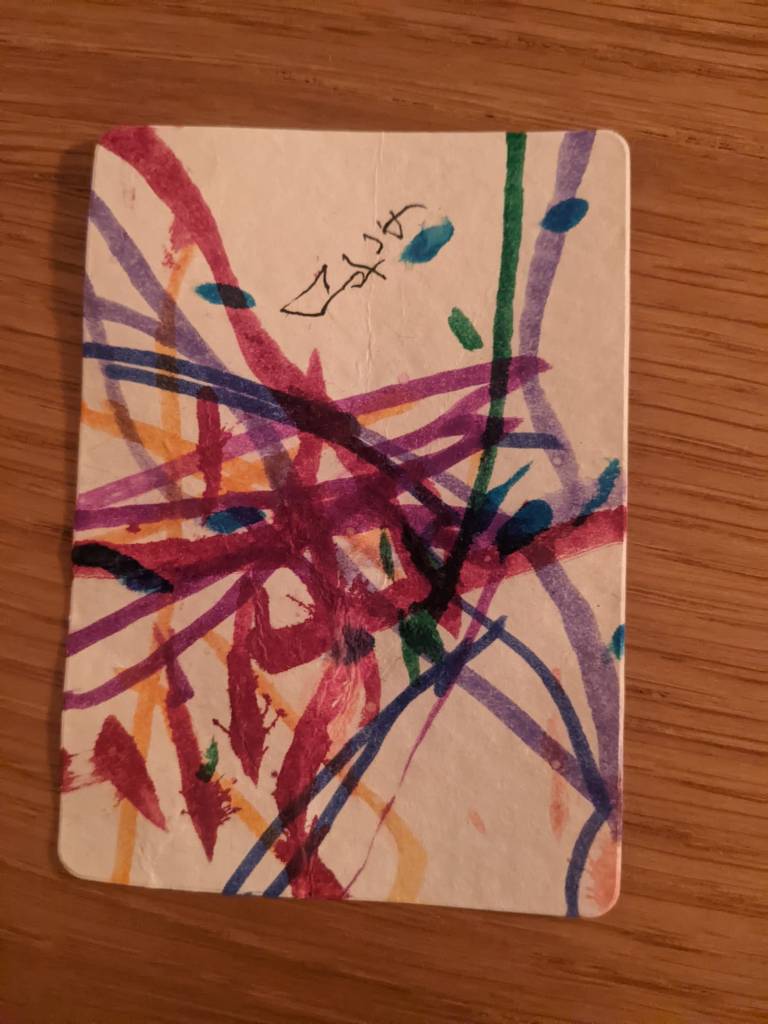
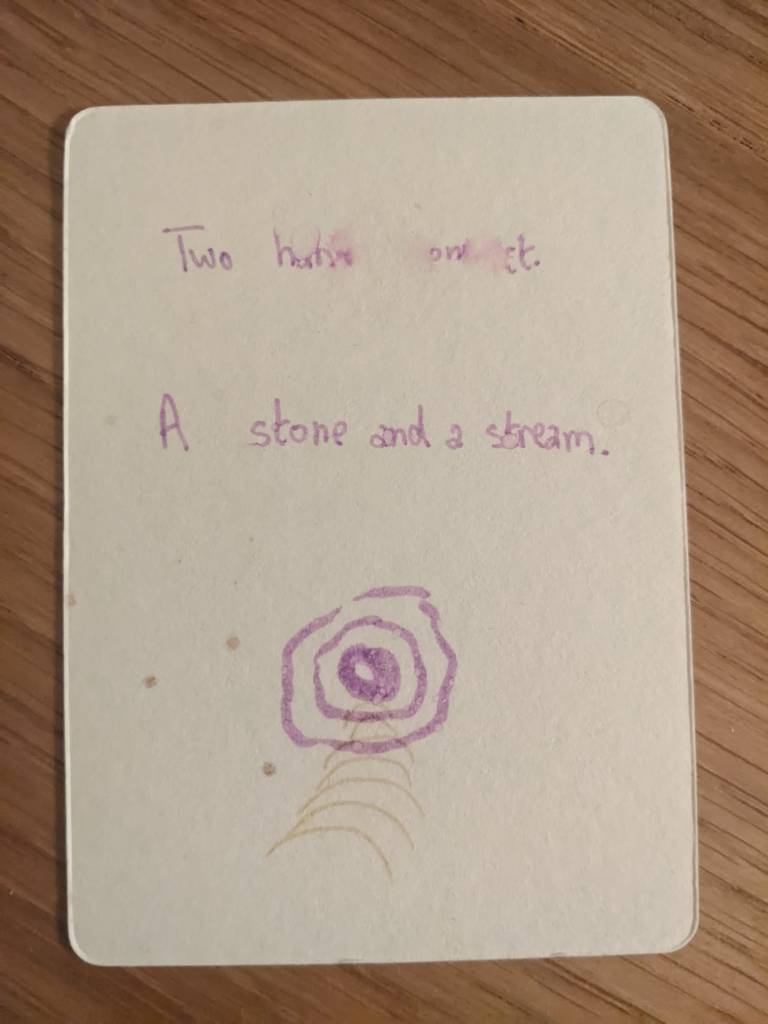
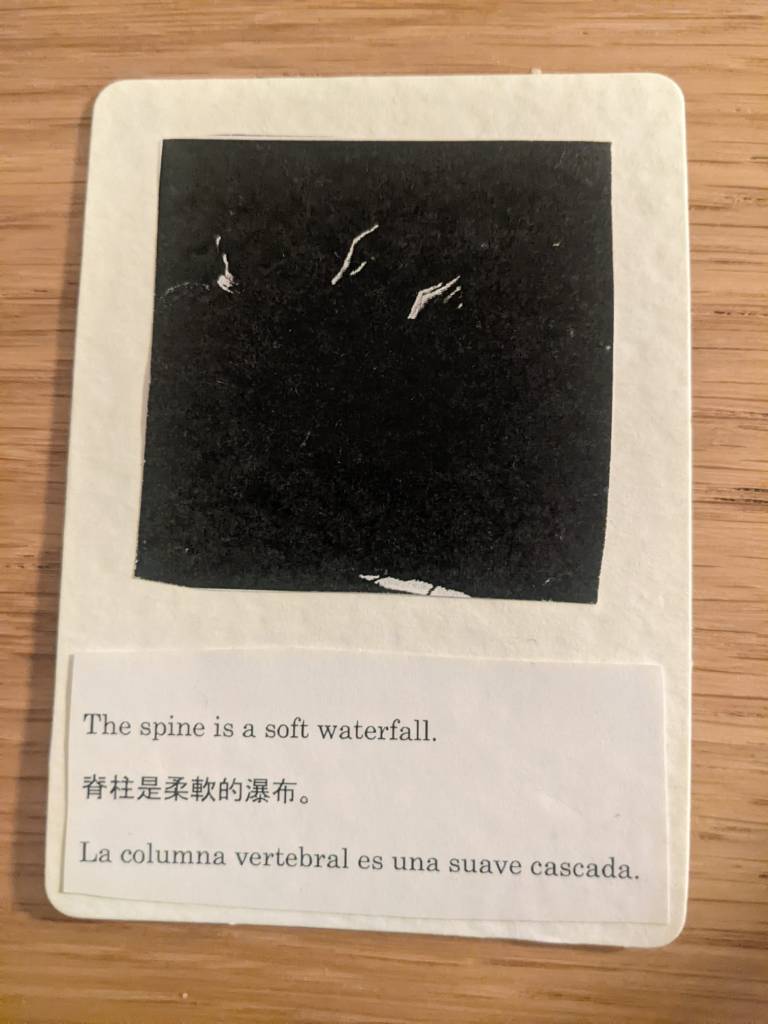
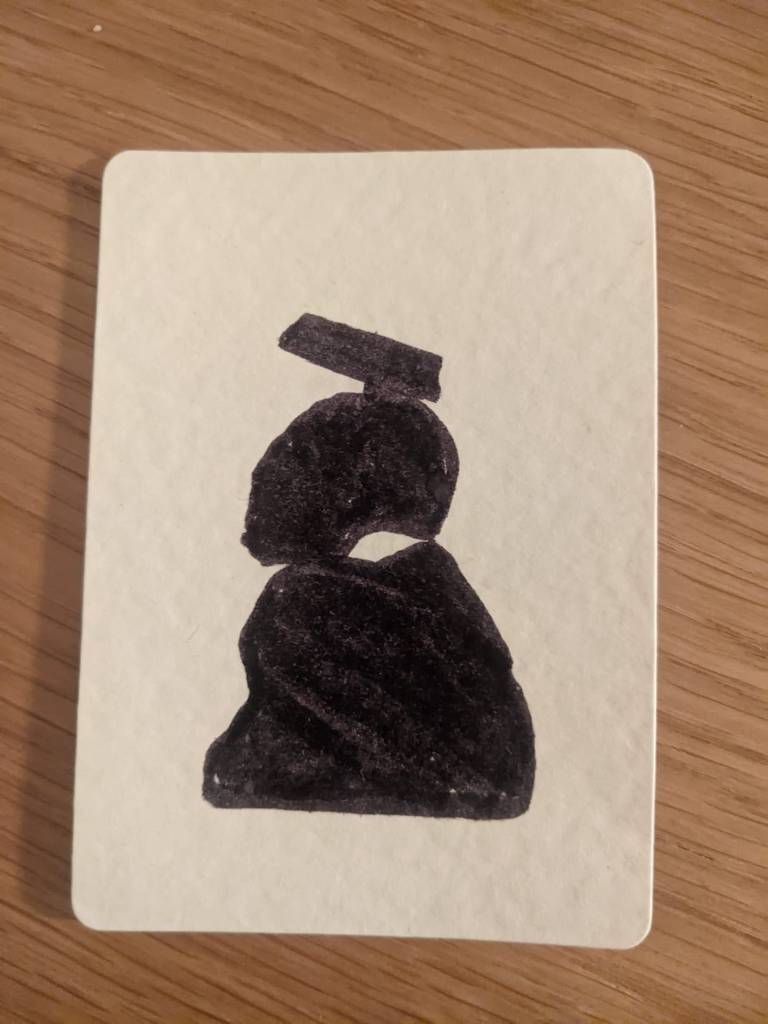
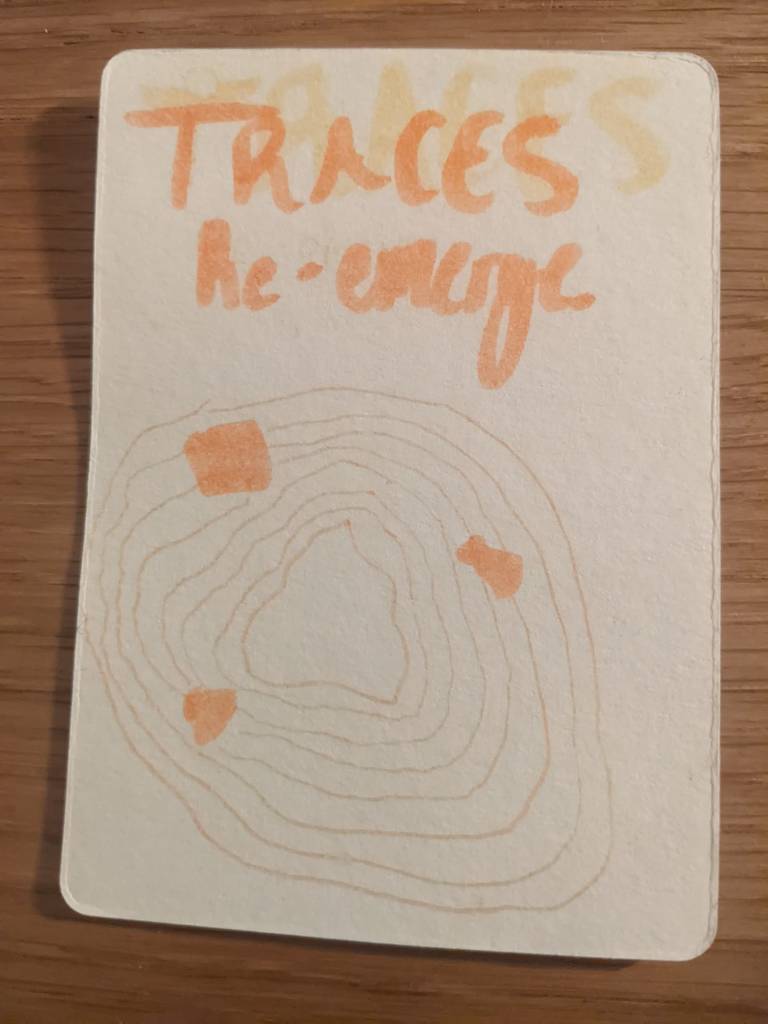
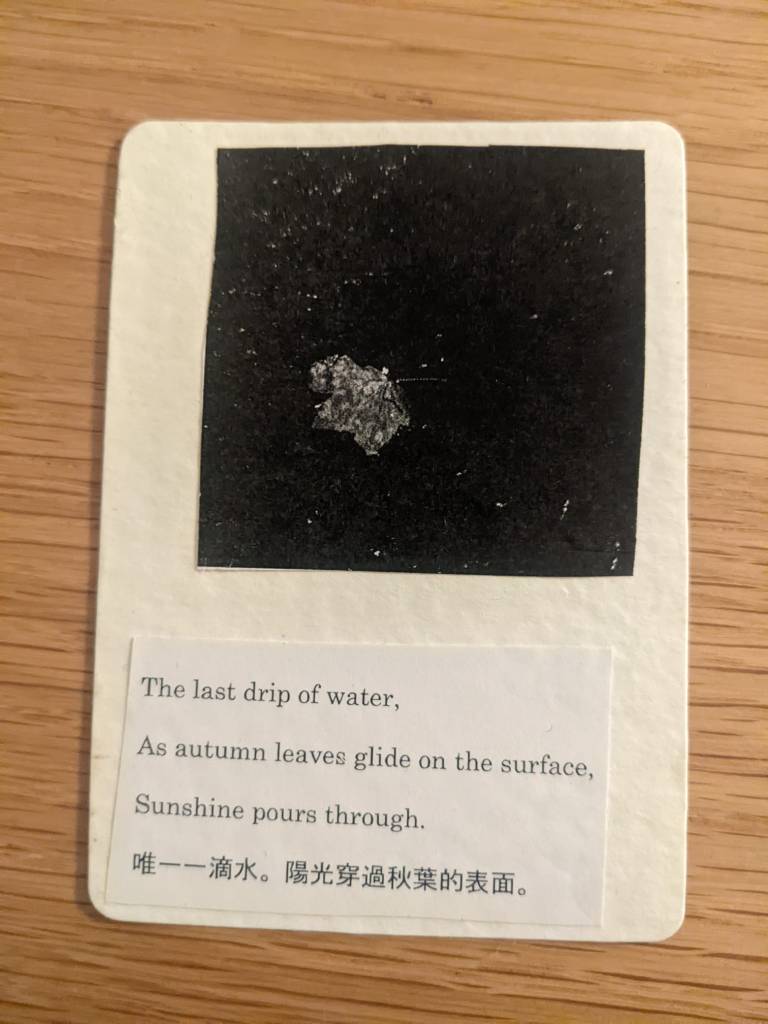
There are other traces too. Other memories. These are just fragments. But all it takes is one drop of water to touch a seed.
What can be done with less?
With simplicity?
…
What is one action you can do?
…
What is ambient dance?
I hope these videos, images and invitations have shared an audio-visual experience of this research. Inspired by Lawrence English’s Notes Towards a Future Ambient, I distilled my reflections in the following research document for my 2024 Masters in Expanded Dance Practice at London Contemporary Dance School. Of course, time flows. However, this artefact still feels resonant!
 Billy Maxwell Taylor / Eira Dance Theatre